
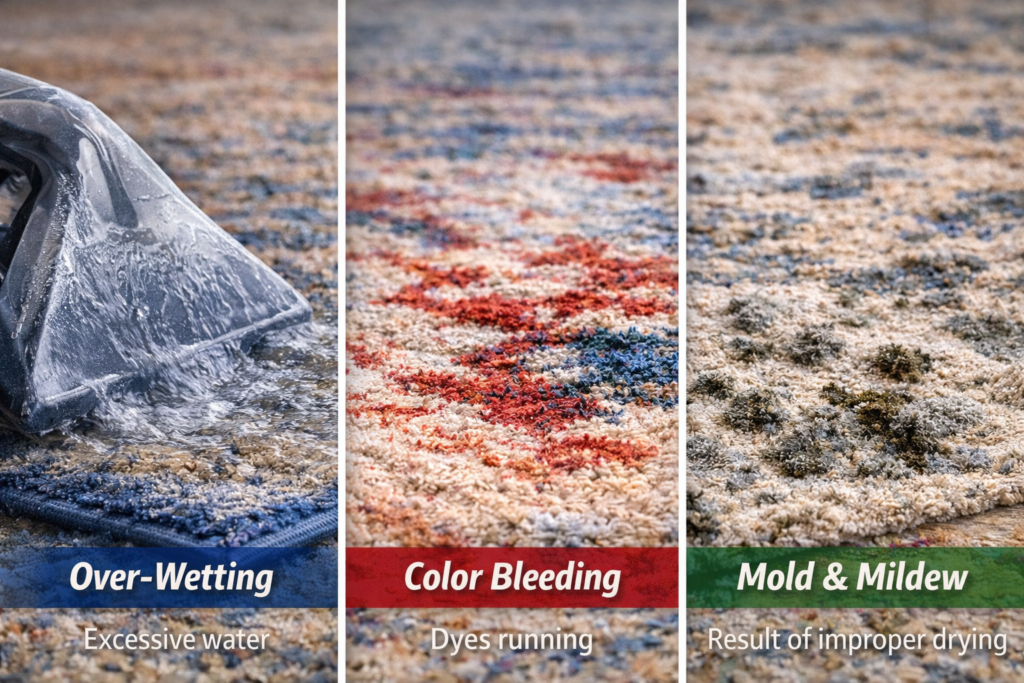
Many homeowners underestimate how serious DIY rug cleaning mistakes can be. Rugs are not built the same way as wall to wall carpets, and treating them with rental machines or harsh store bought products can cause permanent damage. From color bleeding to mold growth, simple cleaning errors often lead to costly repairs or even complete rug replacement. Understanding why rugs react differently to water, chemicals, and heat is the first step in protecting your investment.
Why Most Rugs Are Not Designed for DIY Cleaning
Area rugs are made from a wide variety of natural and synthetic fibers, each with its own sensitivity level. Wool, silk, cotton, viscose, and blended materials all respond differently to moisture and cleaning agents. Unlike standard carpets that are designed for heavy cleaning extraction, many rugs require controlled washing methods and careful drying procedures. Applying too much water or using high heat steam machines can weaken fibers, distort texture, and reduce lifespan significantly.
Fiber Sensitivity to Water and Chemicals
Natural fibers such as wool are highly absorbent. When soaked excessively, they retain moisture deep within the pile and foundation. If not dried properly, this moisture can cause stiffness, odor, or even mildew growth. Silk fibers are even more delicate and may lose their shine or strength after exposure to alkaline cleaners. Synthetic rugs may appear durable but can still suffer from heat damage or chemical discoloration.
Dye stability is another major concern. Different dyes react differently to moisture and pH levels. As explained in Textile dye, natural and synthetic dyes bond to fibers in specific ways, and improper cleaning can disrupt these bonds. Without proper dye testing, color bleeding becomes a serious risk.
Handmade vs Machine Made Differences
Handmade rugs are often constructed with hand tied knots and natural dyes. They typically do not have the same synthetic backing systems found in carpets. Water can easily pass through the fibers and into the foundation, where it becomes trapped. Machine made rugs may include latex adhesives that weaken when over wetted. Excess moisture can cause bubbling, curling edges, or separation between layers. Treating both types of rugs the same way is one of the most common DIY errors.
Over-Wetting and Improper Drying
Over wetting is one of the most damaging DIY rug cleaning mistakes. Rental steam cleaners often inject more water than they extract. This leaves moisture trapped inside the rug backing and even underneath the rug on the floor surface.
Water Penetrating Rug Backing
When water seeps into the foundation threads, it weakens structural integrity. Repeated saturation can cause the rug to lose shape or develop ripples. The backing may shrink differently than the surface fibers, leading to distortion that cannot easily be corrected.
Mold and Mildew Formation
Trapped moisture creates an ideal environment for mold and mildew. Thick rugs can take several days to dry completely if left indoors without airflow. During this time, bacteria and fungal growth can develop beneath the surface. This not only damages the rug but may also affect indoor air quality.
Odor Issues After Drying
Many homeowners notice a musty smell after their rug dries. This odor is often caused by incomplete moisture removal rather than dirt. Once mildew forms within the foundation, surface cleaning will not eliminate the smell. Professional drying rooms and controlled airflow systems are typically required to resolve the issue properly.
Color Bleeding and Dye Transfer
Color bleeding is one of the most heartbreaking forms of rug damage because it is often irreversible. Natural dyes, especially in handmade rugs, can run when exposed to excessive water or improper cleaning solutions.
Why Dyes Run During Home Cleaning
Certain dyes are sensitive to pH imbalance. If a cleaning solution is too alkaline or acidic, it can destabilize the dye molecules. High temperature steam also increases the risk. Many homeowners attempting steam cleaning rugs do not perform a dye stability test beforehand, which significantly increases the chance of bleeding.
Professional rug care resources such as Rug care guides emphasize the importance of spot testing before full cleaning. Skipping this step is one of the leading causes of permanent discoloration.
Irreversible Discoloration Risks
Once dyes migrate from darker areas into lighter sections, restoring the original pattern becomes extremely difficult. In some cases, red dyeing is required, but results are rarely perfect. Even slight color distortion can reduce the aesthetic and financial value of a rug significantly.

When DIY Stops and Professional Help Is Needed
Recognizing the limits of home cleaning can save your rug from serious damage. DIY methods are generally suitable for light surface maintenance, such as vacuuming or blotting small spills. Deep washing, however, requires knowledge of fiber type, dye stability, and controlled moisture levels.
Visible Damage Signs
Warning signs that professional help is needed include persistent odor after drying, visible color bleeding, curling edges, buckling, stiff texture, or fringe discoloration. If a rug feels unusually heavy or damp for more than a day, moisture may be trapped inside. Continuing to clean it at home can worsen structural damage.
Preventing Further Deterioration
Preventing rug damage risks is far more cost effective than repairing severe problems later. Professional cleaning involves controlled washing environments, moisture monitoring, specialized extraction equipment, and proper drying facilities. Technicians test for dye stability before cleaning and adjust cleaning solutions to suit the specific fiber type.
Regular maintenance such as gentle vacuuming without a beater bar, rotating rugs to distribute wear, and blotting spills immediately can help maintain appearance. However, deep cleaning should be performed by trained professionals who understand how different materials respond to water, heat, and chemicals.


