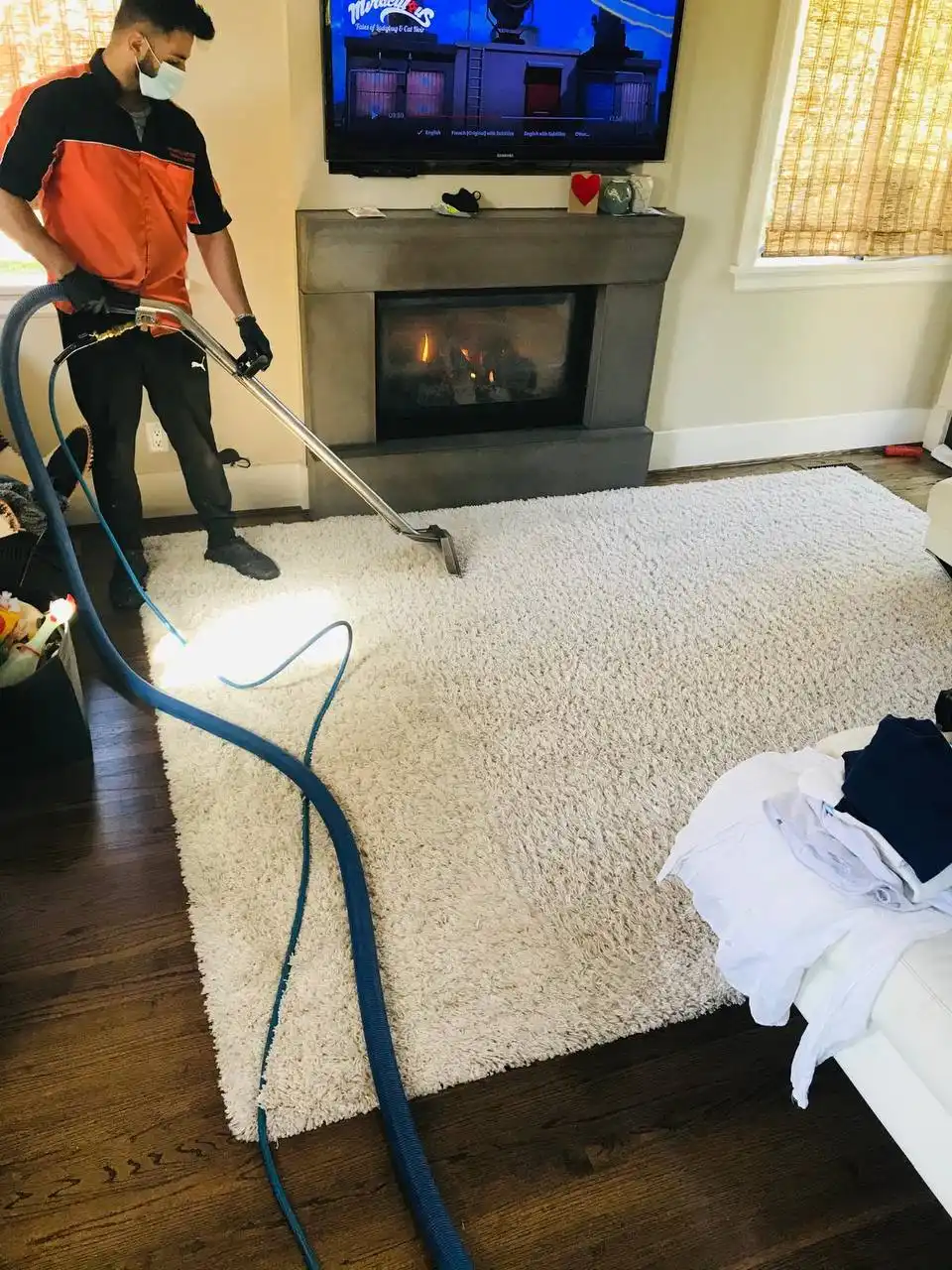

Transparent Pricing
Simple Pricing, Confirmed Before We Start
Every home is different. We provide custom quotes based on your home's size, layout and specific needs - so you get the right service at the right value.
|
Service
|
Price
|
|---|---|
|
Area rug cleaning |
Size of the rug |
|
Wool and natural fibre rugs |
Size and fibre |
|
Pet urine treatment |
Per affected area |
|
Booked with carpet cleaning |
Discounted |
|
Delicate or hand-knotted rugs |
Quoted after inspection |
You get the final number before we start. We look at the rug first. If we don't think we should clean it, we'll say so, and there's no charge for the visit.
What Changes the Price?
Rugs are priced by size, but three other things move the number.
What the rug is made of
house Synthetic rugs clean quickly. Wool, cotton and natural fibres need lower moisture, gentler products and more time.
What's in it
wrench Pet accidents, set-in spills and years without a professional clean all need treatment beyond the standard process.
How delicate it is
checkbox Hand-knotted rugs, fringes, unstable dyes and viscose all need a more careful approach, and sometimes a different one entirely.
Not sure what your rug is made of?
Send us a photo of the front and the back. The back tells us more than the front does.
HOW WE WORK
We Clean Rugs in Your Home
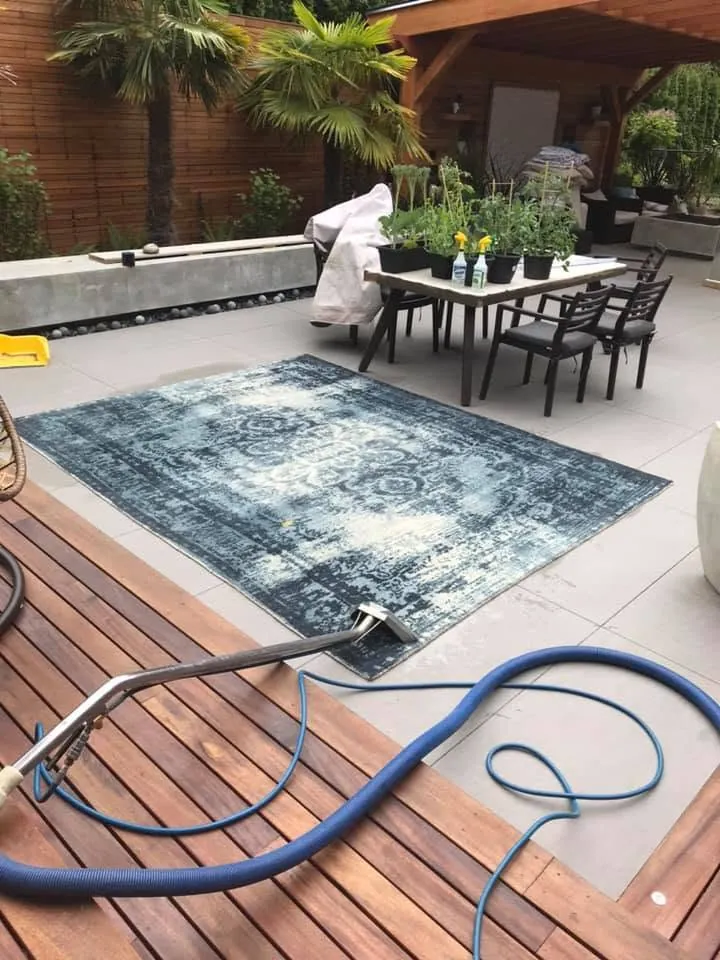
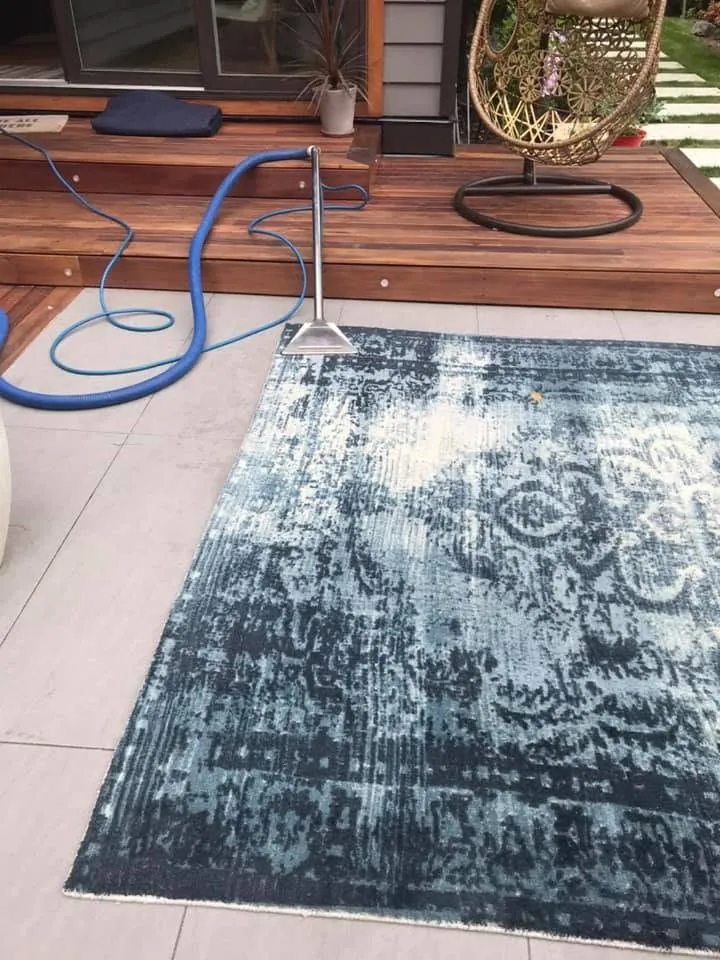
Worth being clear about this, because there are two ways to clean an area rug and they suit different rugs.
In a home
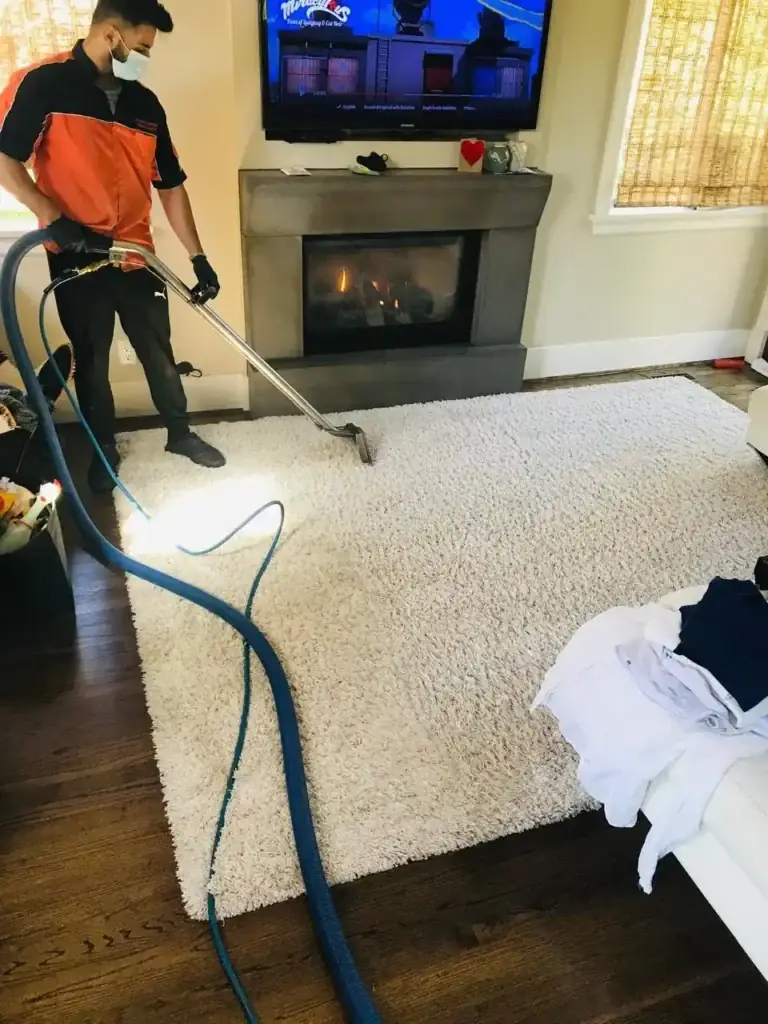
which is what we do. The rug stays where it is, gets cleaned on site, and dries in your house. It's quicker, there's nothing to drop off or collect, and for the large majority of area rugs it's the right approach.
In a plant
where a rug is collected, dusted mechanically, submerged, washed and dried in a controlled room over several days. This is the traditional method for hand-knotted wool and silk rugs, and for anything genuinely valuable it's worth the wait. Most rugs in most Vancouver homes are machine made, synthetic or wool blend, and in-home cleaning does a proper job on them. But if you own a hand-knotted Persian or Oriental rug, an antique, or a silk piece, tell us before you book. We'll look at it and tell you honestly whether we're the right people for it. Sometimes the answer will be no, and we'd rather say that than take your money and your rug's colour with it.
FIBRE DECIDES THE METHOD
What Your Rug Is Made Of
The fibre decides the method. This is the whole job, and it's why we look at the back of a rug before we look at the front.
Wool
is the most common natural fibre in area rugs and the one that punishes the wrong method. It's naturally soil resistant and it cleans up beautifully, but it will felt and shrink with too much heat, it browns if it's left too wet, and alkaline products damage the fibre. Lower moisture, neutral pH, controlled drying.
Nylon and polypropylene
cover most machine made rugs sold in the last twenty years. They're durable and forgiving, they tolerate hot water extraction, and they're the quickest rugs we clean.
Cotton
appears in flatweaves, dhurries and rug fringes. It absorbs a lot of water, it's prone to browning as it dries, and the fringes are usually the first thing to go grey on an otherwise clean rug.
Jute, sisal and seagrass
are the ones to be careful with. They shrink, they stain from water alone, and they can't take a wet clean at all. These get low moisture methods or nothing.
Viscose
also sold as art silk, bamboo silk or banana silk, is the single most misunderstood material in this trade. It looks like silk, it's cheap, and it reacts badly to water: the fibres go yellow, lose strength and can pulp. If you have a rug that feels like silk and cost a few hundred dollars, it's almost certainly viscose, and it needs a completely different approach. Tell us before we arrive.
Silk
is genuine silk, and it belongs in a plant, not a living room.
OUR PROCESS
How the Job Runs
Five stages. The order is the part that matters.
Inspection
We check the fibre, the construction, the dyes and the condition, front and back. On a rug we haven't seen before this decides everything that follows, including whether we should be cleaning it at all.
Dry soil removal
Thorough vacuuming on both sides. On a wool rug this is the single most important step, because most of what's in the rug is dry, and adding water to dry soil makes mud.
Colour test
A discreet test on the dyes before any solution goes on the rug. Older rugs and hand-dyed pieces can bleed, and finding that out on the corner is very different from finding it out in the middle.
Pre-treatment
A solution matched to the fibre, left to work. Neutral pH for wool and natural fibres, standard prespray for synthetics.
Cleaning
Hot water extraction on synthetics, low moisture on wool and anything delicate. The aim is to take out more water than goes in.
Grooming and drying
The pile gets set in one direction and we talk through airflow so it dries evenly rather than from one side. Most rugs take one to two hours. Large or heavily soiled rugs take longer.
Want cleaner indoor air without the guesswork?
Get a fast, no-obligation quote from our local Vancouver team.
WOOL RUGS
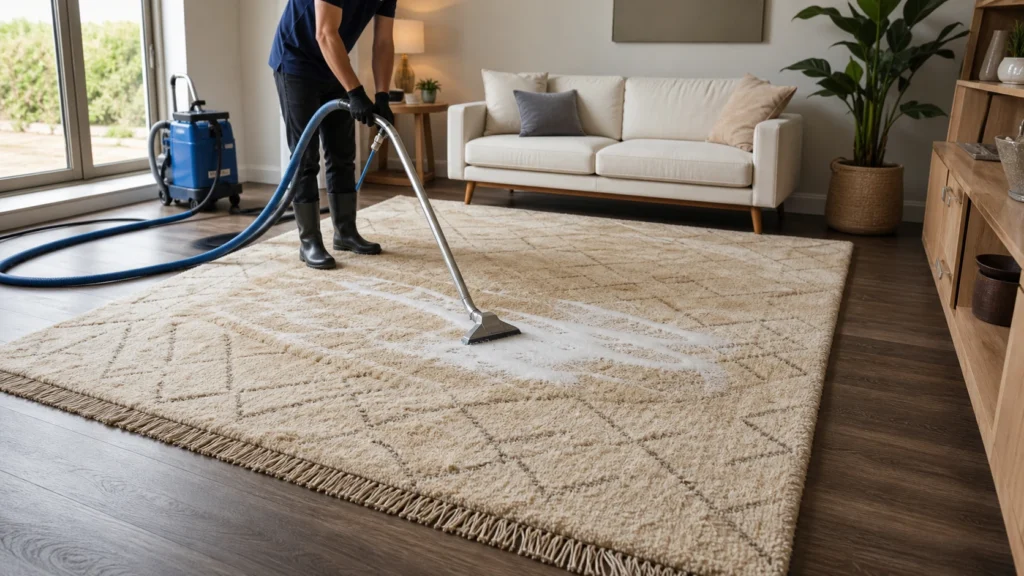
Wool Rug Cleaning
Most of the rugs we're asked about in Vancouver are wool, so it's worth its own section.
Wool is genuinely good at staying clean. The fibre has a natural scale structure that holds soil near the surface instead of letting it bond, which is why a wool rug that's vacuumed regularly looks better for longer than a synthetic one. The catch is that the same structure makes it vulnerable to the things a careless clean does: heat opens the scales and they interlock permanently, which is felting, and it can't be undone.
So wool gets treated differently at every step. Lower water temperature. Neutral pH products rather than the alkaline prespray that works on synthetics. More thorough dry soil removal before any moisture goes near it, because dry soil is most of what's in a wool rug. And faster drying, because wool left damp browns from the natural oils in the fibre.
We use WoolSafe Approved products, which is the independent certification that tests specifically for safety on wool. It's the same standard we apply to wool broadloom, and it's worth asking any company about before you let them start.
One more thing about wool rugs: shedding after a clean is normal on a newer rug and isn't damage. Wool rugs release loose fibre from the manufacturing process for a year or more, and cleaning brings some of it to the surface at once.
PETS AND ODOURS
Pet Accidents
Urine on an area rug is worse than urine on wall to wall carpet, for a reason that isn't obvious: the rug sits on a floor. What soaks through goes into the backing, then onto the hardwood or laminate underneath, and it stays there.
Which means two things. First, treating the rug alone sometimes doesn't fix the smell, because the source is now the floor. Second, the longer it sits, the more likely you are to see a permanent mark on the floor as well as the rug.
Our treatment uses an enzyme product that breaks the urine down rather than covering it, applied to the full extent of the contamination rather than the visible stain, which is always bigger than it looks. On wool, urine is particularly unkind: it's alkaline, it attacks the dye, and colour loss from an old pet accident is often permanent regardless of what anyone cleans it with.
Tell us when you book if there have been accidents. We need to bring the right treatment and leave enough time.
AFTER THE CLEAN
Drying
Two to six hours for most rugs, longer for thick wool and longer again between October and March.
That range is wide because rugs vary more than carpet does. A thin synthetic flatweave is dry in a couple of hours. A dense wool rug with a thick foundation holds far more water and wants a full day with air moving over it.
What helps: lift the rug at the corners or get air underneath it, run the HVAC fan rather than opening windows on a wet day, and don't put furniture back until it's fully dry. That last one matters more than people think, because wooden furniture legs on a damp rug can transfer stain into the pile permanently.
If your rug sits on hardwood, we'll lift it or get airflow underneath. A damp rug left flat on a wood floor is bad for both of them.
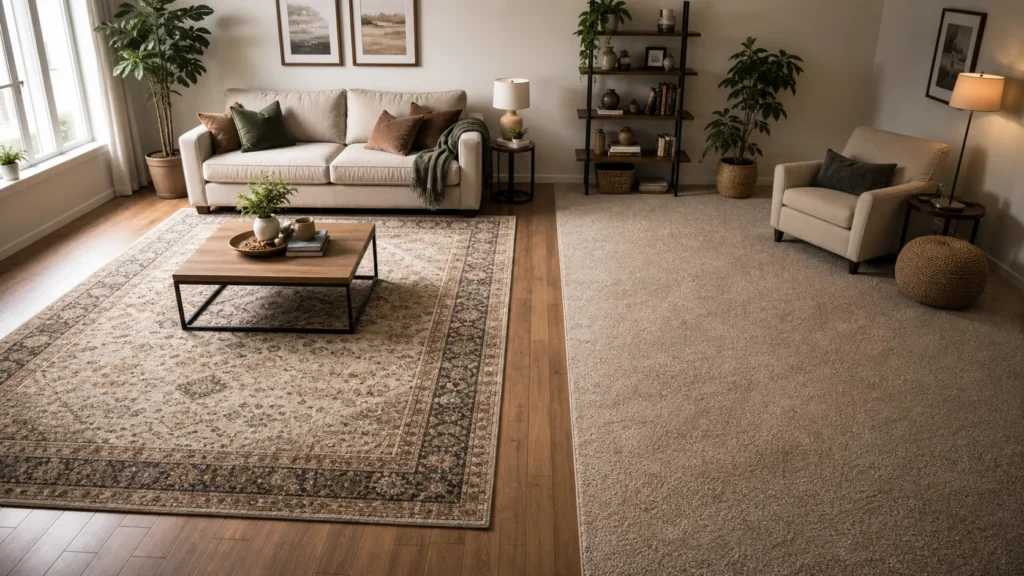
WHICH SERVICE DO YOU NEED?
Rugs or Carpet?
Two different services, and people mix them up when booking.
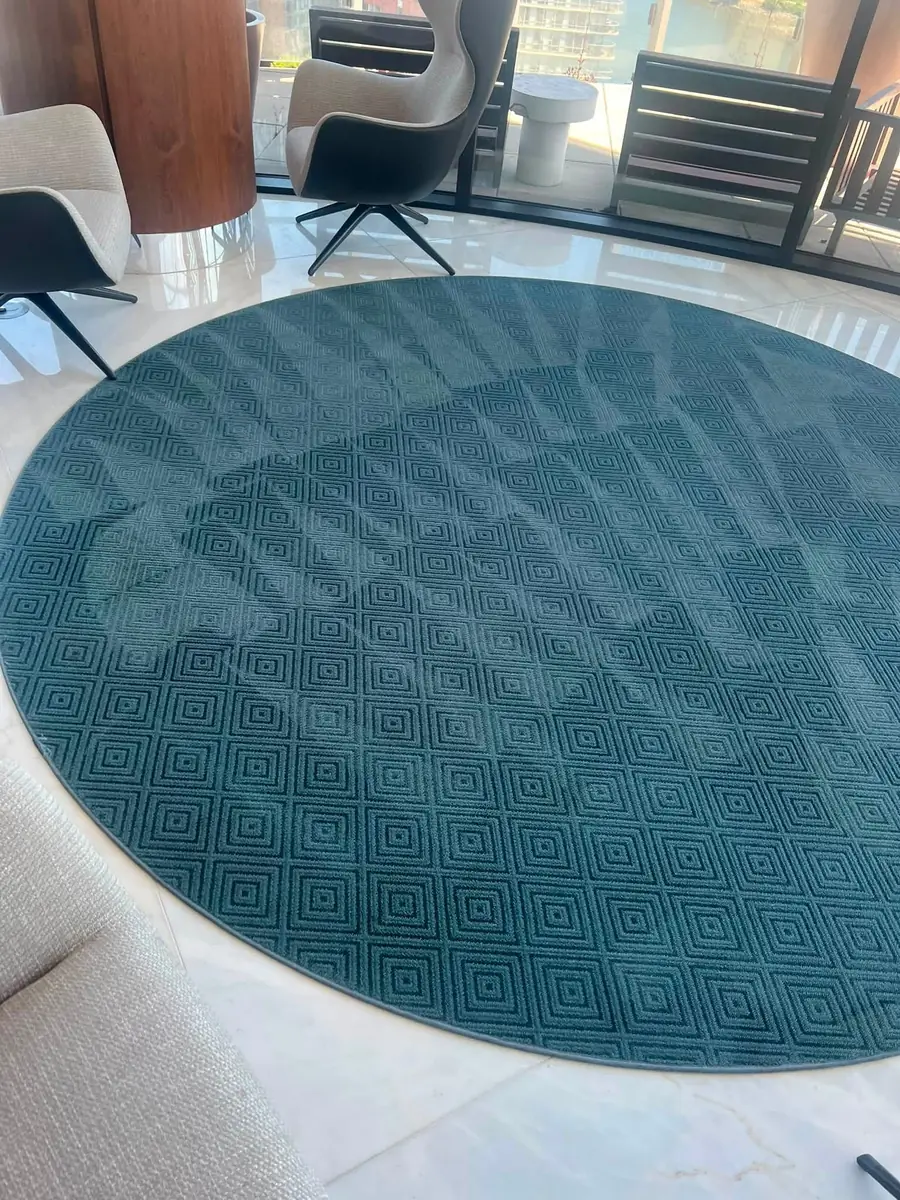
Area rug cleaning : loose rugs that sit on top of a floor, of any size, from a runner to a room sized piece.
Carpet cleaning is wall to wall broadloom, fitted and stretched across the room.
The methods overlap but the jobs don't. A rug needs both sides cleaned, has edges and fringes, sits on a floor that also has to be considered, and is far more likely to be wool. If you have both, we do them in the same visit and it costs less than two separate call-outs.
AREAS WE SERVE
Serving Vancouver & Surrounding Areas
From Vancouver homes to surrounding communities, our local cleaning experts are ready to provide dependable service, flexible scheduling, and exceptional results you can trust.