

DIY carpet cleaning can handle everyday upkeep, but a disappointing result often starts before the machine touches the floor. The carpet may need a different product, the tank mix may be too strong, or the room may have nowhere for damp air to go. A little preparation gives you a better chance of finishing with clean carpet rather than a larger wet patch. For a small spill, start with dry blotting and the carpet manufacturer’s instructions. If the carpet already has recurring odours or widespread staining, home carpet cleaning may be the more useful next step. For a manageable home clean, use the checks below before adding water.
Choose spot cleaning or a machine clean
For one fresh spill, lift any solids and blot liquid with a white absorbent cloth. Check the carpet care guide before adding a spot treatment. For a larger area of compatible fitted carpet, use an extractor with a recovery tank. Check the machine manual as well as the carpet instructions before starting. Loose rugs need their own care method. Test the proposed treatment on a hidden patch and let it dry. Compare its colour and texture with the untreated carpet in the same light. Stop if the patch changes. A successful test does not approve a different mixture or cleaning method. For a machine clean, work in this order:
- Clear loose objects and move light furniture where practical.
- Vacuum the area with a setting suitable for the pile.
- Pretreat spots only as the carpet and product instructions allow.
- Fill the machine with the specified water temperature and measured formula.
- Clean in sections, following the machine’s wet and extraction-only pass instructions.
- Keep air moving and leave the area clear until it is dry.
What to put in a DIY carpet cleaner
Use the formula and dilution permitted by both the carpet care guide and your machine manual. A spot-treatment recipe is not automatically suitable for the tank. Do not substitute laundry detergent, dishwashing liquid or fabric softener because an online recipe uses them. If the instructions do not approve the proposed mixture, choose a compatible product instead. Plain water may be specified for a rinse. That is a separate stage from deciding how to loosen the soil. Check the directions before replacing the cleaning formula with water alone, and recover the rinse water rather than leaving it in the carpet.
Mistake 1 Cleaning without knowing the fibre
A machine being suitable for carpet does not make it suitable for every carpet. Look for the installation paperwork or ask the retailer for the product’s care guide. An area rug needs its own instructions too; avoid treating it as an extension of the fitted carpet underneath. WoolSafe’s care advice for sensitive fibres explains that a blend should be treated according to its most sensitive fibre. If you cannot identify the material or permitted method, keep to dry surface care and ask for advice before wet cleaning. Photograph the label so you can share it without moving the rug again.
Mistake 2 Expecting the extractor to replace vacuuming
Pick up loose objects, then vacuum the carpet before wet cleaning. Use the appropriate attachment around skirting boards and beneath furniture edges. Choose a vacuum setting that suits the pile rather than forcing a brush through it. Dry grit and crumbs need removing even when the carpet’s main problem looks like a stain. Manufacturer care guidance puts regular vacuuming at the centre of maintenance. Give the strip beside the sofa and the route from the entry particular attention. Empty or service the vacuum as its manual directs before carrying on if pickup drops.
Mistake 3 Making the tank mixture stronger
Measure the formula for the amount of water you are actually using. A partly filled tank needs the corresponding dose, not the amount for a full tank. Keep a photo of the dilution instructions if the bottle will be stored elsewhere. Extra detergent can leave residue and contribute to fast re-soiling. Dishwashing liquid is also a poor substitute for a machine formula. WoolSafe warns against household soaps on carpet because they can cause residue and other problems. Use a product compatible with both the carpet and machine. Follow their instructions for rinsing rather than improvising another tank mixture.
Mistake 4 Scrubbing until the mark disappears
Lift solid material carefully, then blot liquid with a white absorbent cloth. Work towards the centre and turn the cloth to a clean section as it takes up the spill. Use only a treatment permitted for the carpet and the particular stain. Hard rubbing can fray fibres. Once a patch looks fuzzy, more cleaning may not restore its original texture. If carpet colour transfers during testing or treatment, stop using the product and seek advice. Keep the bottle so the cleaner knows exactly what was applied. Avoid trying a second chemical to correct an unexplained colour change. 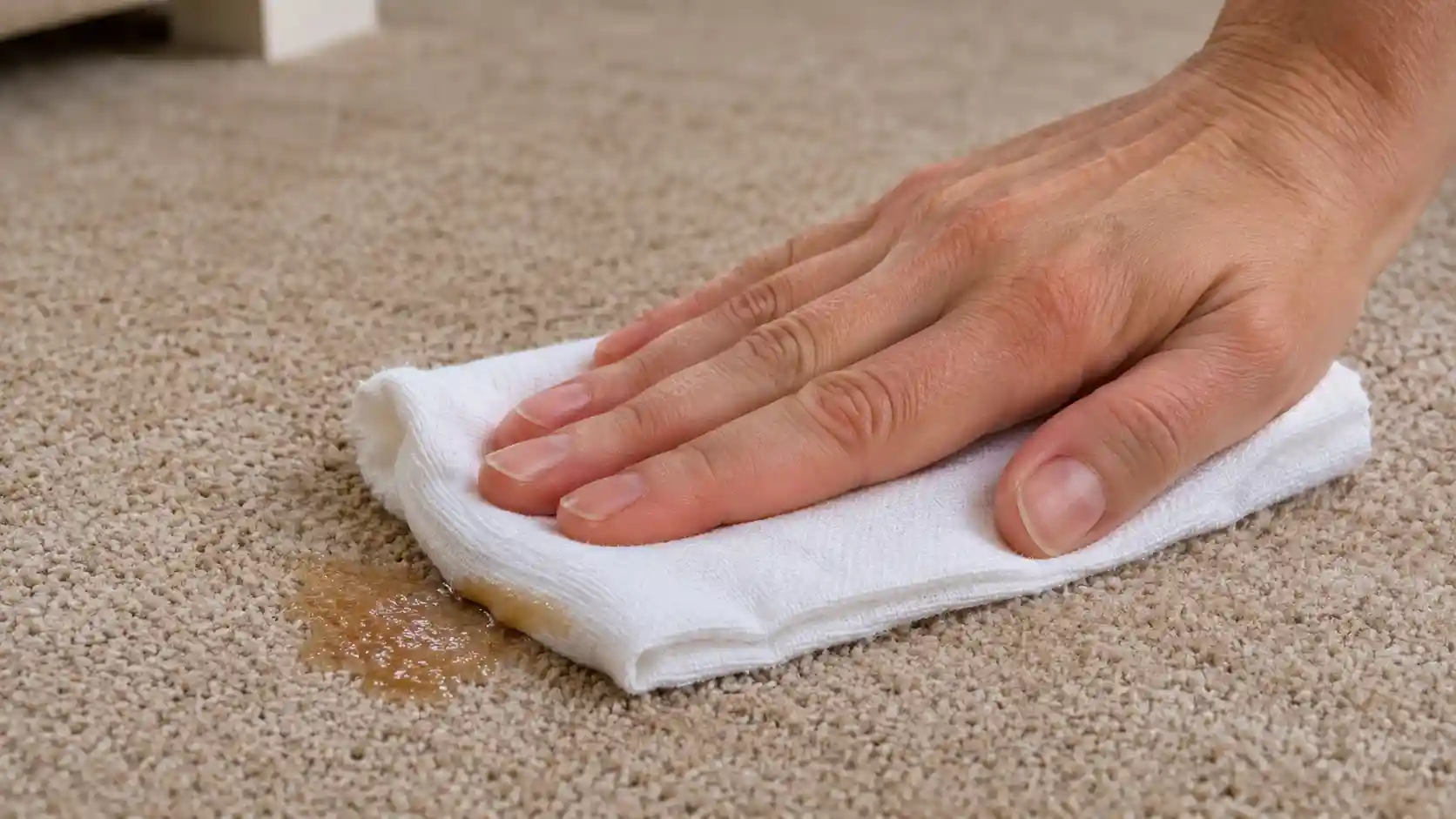
Mistake 5 Adding water when pickup has stopped
Learn which control releases solution and how the machine recovers it. A dry pass means operating the extraction function without adding more liquid. Follow the machine’s specified pace and pass pattern; there is no single ratio that fits every extractor. The CRI residential cleaning standard recommends extracting as much water as possible after wet cleaning. If pickup falls, stop applying solution. Switch off and check the recovery tank, nozzle and other user-serviceable parts according to the manual. Resume only when recovery is working. A darker lane is not, by itself, a reason for another wet pass. 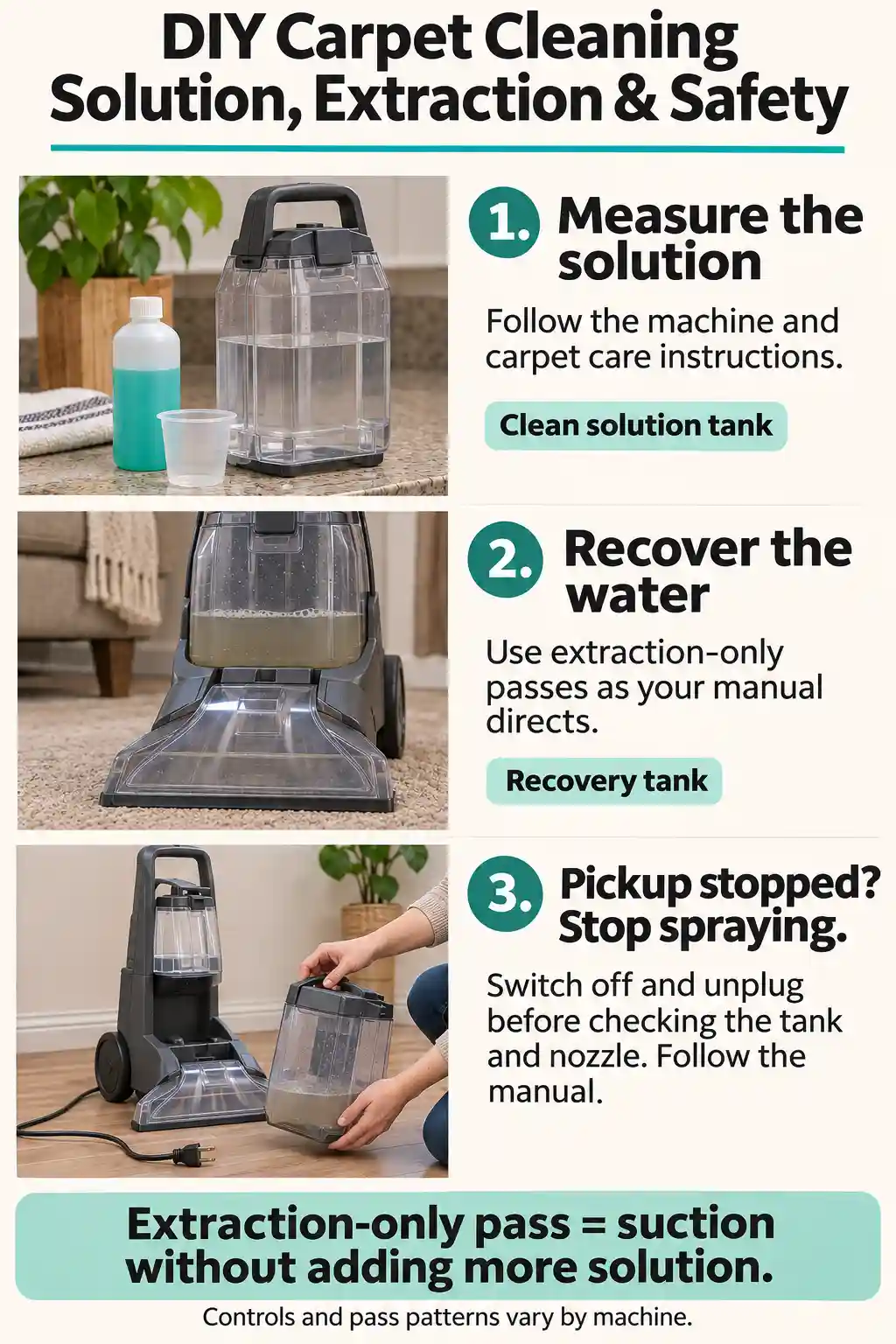
Mistake 6 Leaving the drying plan until last
Arrange airflow before starting. In a Vancouver condo, that may mean cleaning the living room while the bedroom remains available, rather than wetting every carpeted space in one session. Leave room to move around the damp section. Keep air circulating and follow the equipment and carpet guidance for drying. Opening windows is useful only when outdoor conditions help; a rainy day does not automatically offer good drying air. Keep furniture off the cleaned area until it is dry. If heavy furniture stays in place, follow guidance on suitable protection under its legs. Our guide to drying carpet after cleaning covers airflow in more detail. Its professional-cleaning timings should not be treated as a promise for a home machine. If the carpet is unusually wet or is not progressing towards dry, get advice rather than adding another rinse. 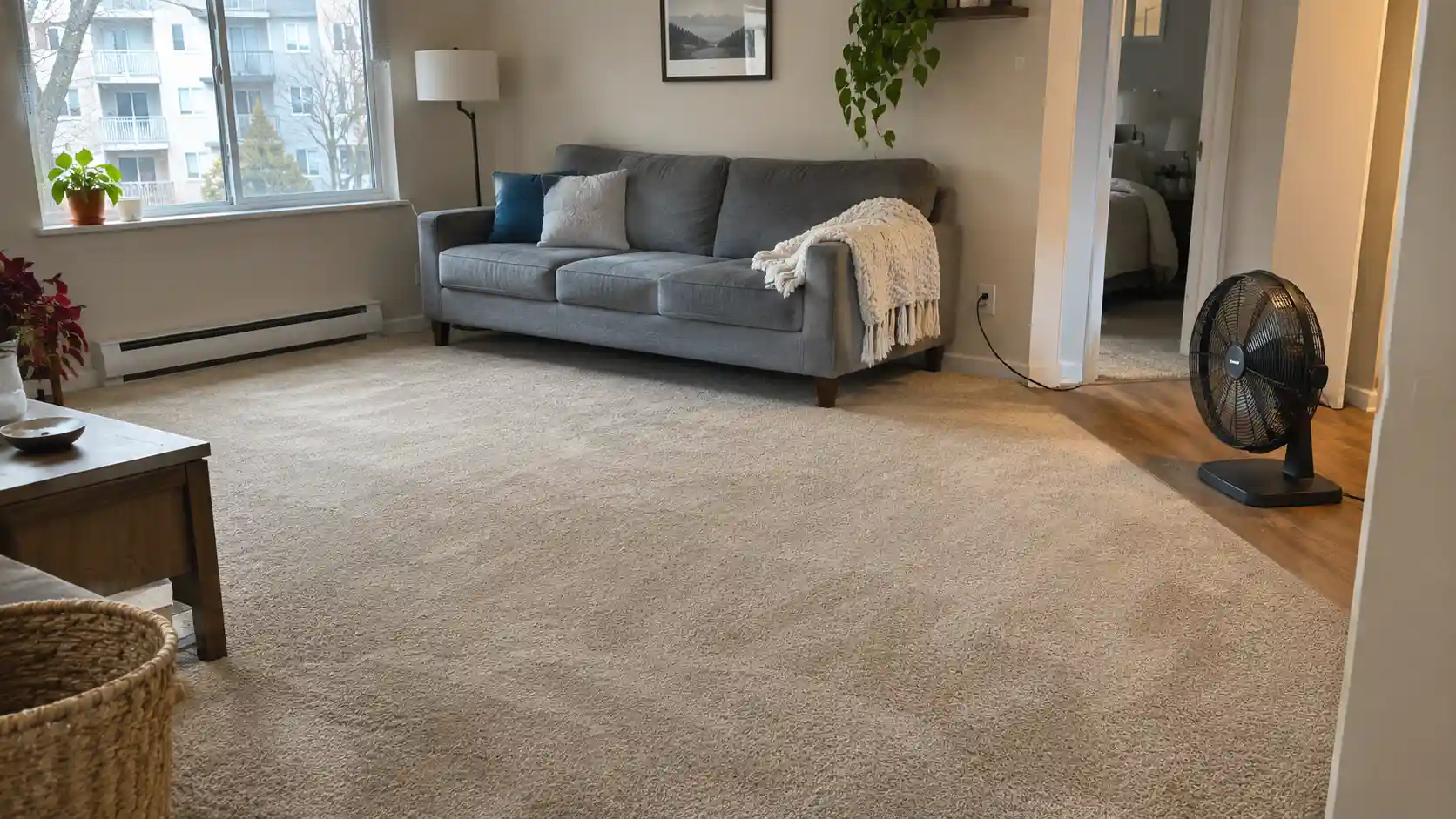
Mistake 7 Recleaning a stain that returns
A spot that disappears while wet and returns during drying may be wicking. Material remaining lower in the carpet can move to the visible surface as moisture travels upwards. That differs from a patch collecting fresh soil after cleaning. The IICRC consumer care sheets describe both wicking and rapid re-soiling. Neither appearance alone proves the cause of your particular mark. Photograph it after drying and record what you used. A cleaner can use that history to decide whether more treatment is appropriate. For a returning smell, see why carpet smells after cleaning before choosing another product.
Decide what to do before another pass
| What you notice | What to do next |
|---|---|
| Colour transfers or the test patch changes | Stop that treatment and seek advice |
| The extractor stops recovering water | Stop spraying and check the machine manual |
| A mark returns after drying | Record the treatment history and ask for assessment |
| Carpet remains unusually wet | Prioritize drying and professional advice |
AAA Miracle provides residential carpet cleaning in Vancouver using hot water extraction. If a home clean has left a returning stain or odour, tell us what happened and which products you used. Have the carpet details and photographs ready when you call 604-435-3530. We can discuss the appropriate next step before you spend more time treating the same patch.
DIY carpet cleaning questions
Can I put plain water in a carpet cleaner?
Follow your machine’s manual and the carpet care instructions. A clear-water rinse may be part of the process, but water-only cleaning is not a universal replacement for the specified treatment. Extract the rinse water too.
Is a steam mop the same as a carpet extractor?
No. A carpet extractor applies liquid and recovers it into a separate tank. Check your equipment’s permitted uses before putting it on carpet. Do not assume a steam mop provides the same recovery process.
What should I tell a cleaner after a failed DIY attempt?
Explain what caused the original mark, which products you applied and how the carpet changed after drying. Share the fibre information if available. Mention any dampness or odour that remains and whether furniture blocks access.