
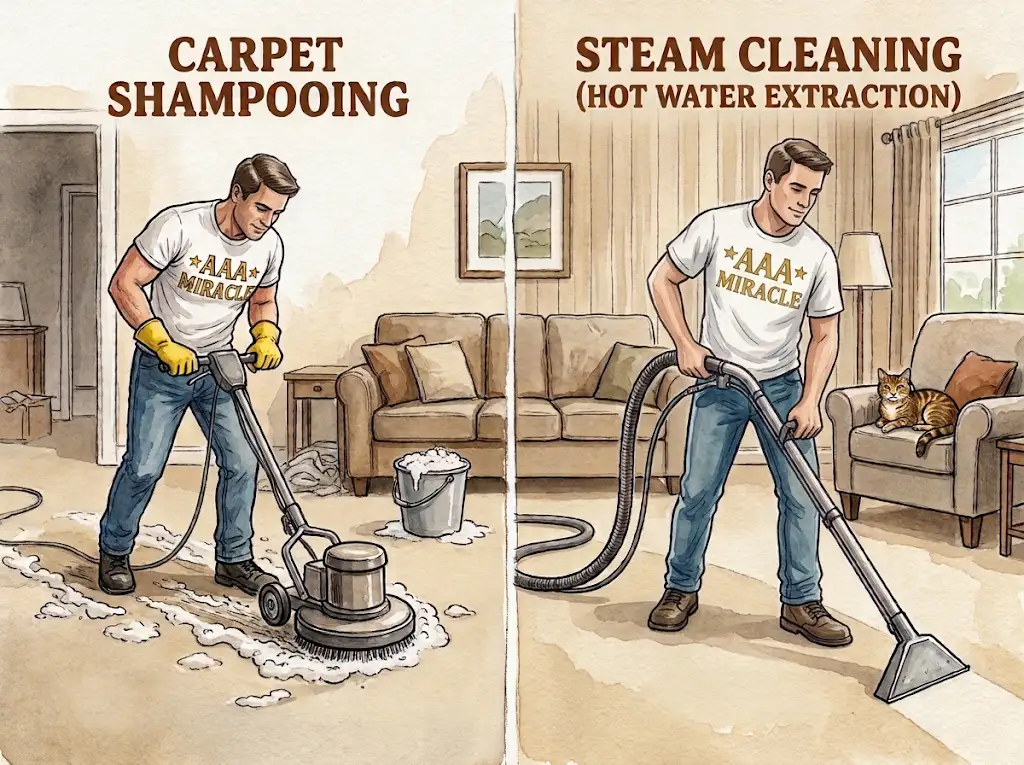
Carpet shampooing vs steam cleaning is one of the first questions people ask us, usually right after a spill or right before a move-out. Both promise a deep clean, but a month later they leave carpet in very different shape. Our team has handled carpet cleaning in Vancouver since 2004, and the straight answer is below.
This post covers how each method works, which one wins on stains, residue, drying time, cost and fibre wear, and which carpets need extra care. It also includes a two-minute home test that shows whether old shampoo is still sitting in your carpet.
The short answer: For most homes, steam cleaning (hot water extraction) is the better choice. It rinses dirt and detergent out of the carpet instead of leaving them behind, so the carpet stays clean longer. Shampooing survives mostly as a word people use for any deep clean.
When someone calls us asking to have their carpets shampooed, we almost never shampoo them. We clean them with hot water extraction, which is what nearly every professional carpet cleaner now does, and which is almost certainly what the caller wanted in the first place.
What Carpet Shampooing Actually Is
Shampooing means working a foaming detergent into the pile with a rotary or cylindrical brush machine, letting it dry, then vacuuming up what’s left. The foam lifts soil off the fibres, but there is no rinse. Whatever detergent the vacuum doesn’t pick up stays in the carpet.
You can also shampoo by hand with a brush and a bucket of carpet shampoo. It works the same way, with even less control over how much detergent stays behind.
What “Steam Cleaning” Actually Is
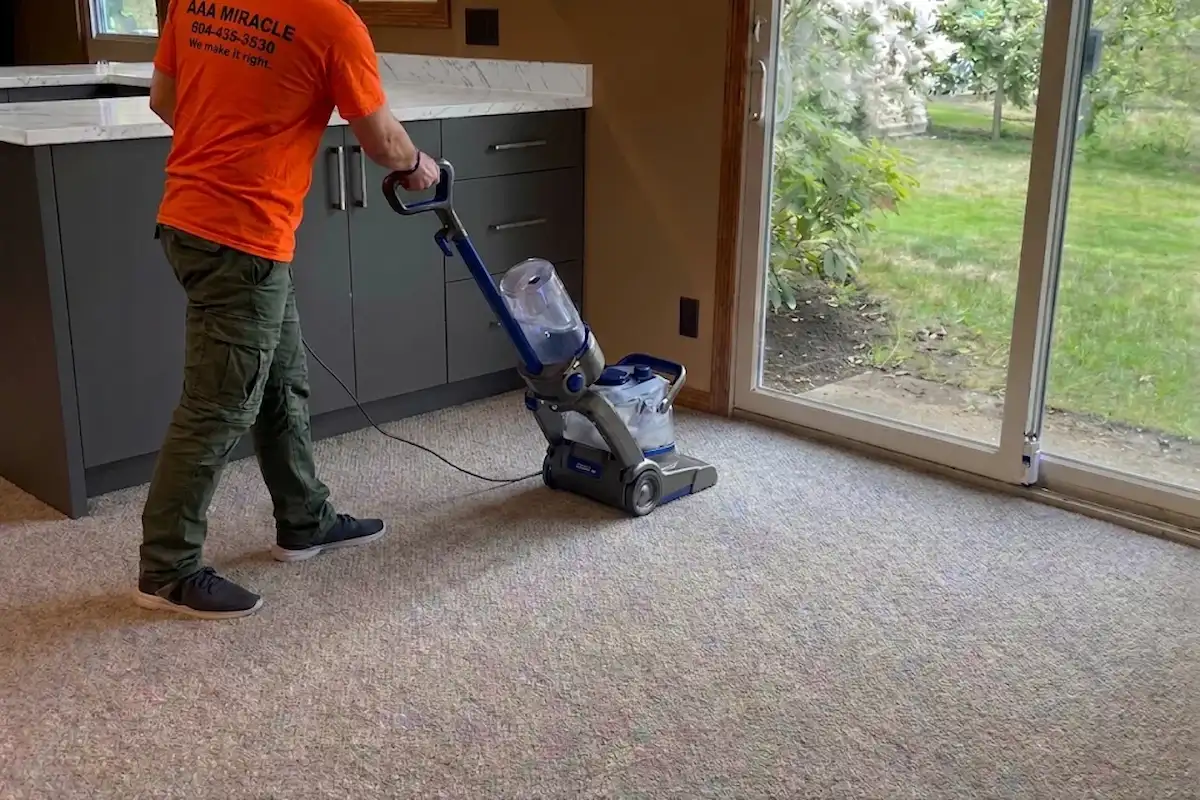
Steam cleaning is the everyday name for hot water extraction. The machine sprays hot water and cleaning solution into the carpet and pulls it straight back out with strong suction, in the same pass. Very little actual steam is involved. The key difference from shampooing is the rinse: the soil and the solution leave the carpet together.
This is different from a vapour steam cleaner or a steam mop. Those really do produce steam, but they have no suction, so they are not built for carpet. Moisture goes into the backing and stays there.
Shampoo vs Steam Cleaning, Factor by Factor
The two methods compare very differently on the things that matter once the cleaner leaves. Each factor below ends with a winner.
Stain Removal
Many guides say shampoo beats steam cleaning on stains because it uses detergent. That comparison pits shampoo against plain hot water, which is not how professionals clean. A proper extraction job starts with a pre-treatment on traffic lanes and spots, gives it time to work, and then rinses all of it out.
Shampoo can lift a fresh surface stain. The trouble is the detergent left in that spot. It stays sticky, attracts new dirt, and the stain seems to come back a week or two later.
Winner: Steam cleaning with proper pre-treatment.
Residue and Resoiling
This is the factor that decides the rest. Shampoo residue is a sticky film on the fibres, and every footstep presses new dirt into it. Within a few weeks, walkways often look darker than they did before the clean. Cleaners call this rapid resoiling, and it is the main reason people think their carpet never stays clean.
Extraction rinses the detergent out with the soil, so there is very little left to grab dirt.
Winner: Steam cleaning.
Drying Time
Drying is where the rinse step pays off in a damp climate. Most carpets cleaned with hot water extraction are dry in 4 to 8 hours. Shampooed carpet often stays damp longer, and a carpet that is still wet a day or more after any clean was given too much water.
In a Vancouver winter, both methods take longer. Run the furnace fan, keep interior doors open, and stay off the carpet until it feels dry at the base. Carpet that stays wet too long can start to smell or grow mould, which is a common reason for carpet that smells after cleaning.
Winner: Steam cleaning.
Cost
Shampooing is sometimes quoted a little lower, because a rotary machine is cheap to run. The lower price rarely holds up. If residue makes the carpet look dirty again in a few weeks, you pay for the next clean sooner.
For comparison, our hot water extraction starts at $129 for three rooms and a hallway, with extra rooms at $39 each and stairs at $39 per 15 steps.
Winner: Shampooing on the receipt, steam cleaning on value.
Fibre Wear
Aggressive brushing with a rotary shampooer can fuzz the tips of cut-pile carpet, and heavy detergent can stiffen modern stain-resistant fibres. Extraction cleans with a wand rather than a scrubbing brush, so done correctly it is gentler over years of cleaning. Some carpet manufacturers name hot water extraction in their care guidance for the same reason.
Winner: Steam cleaning.
DIY Convenience
Home and rental machines are easy to buy or borrow, which is why many people start there. Most of them are actually small extractors, not shampooers, but they have far less heat and suction than professional equipment. The risk is overwetting and leftover soap.
Winner: DIY machines for convenience, professional extraction for results.
At a Glance
Use this table if you only want the bottom line for each factor.
| Factor | Shampooing | Steam cleaning (hot water extraction) |
|---|---|---|
| Stain removal | Lifts fresh surface stains, but residue can bring them back | Strong with pre-treatment |
| Residue | Detergent stays in the pile | Rinsed out with the soil |
| Look after a month | Often darker in walkways | Usually holds up |
| Drying time | Often longer | Most carpets dry in 4 to 8 hours |
| Cost | Sometimes lower upfront | Better long-term value |
| Fibre wear | Brushing can fuzz cut pile | Gentler when done right |
| Equipment | Rotary or cylindrical brush machine | Portable or truck-mounted extractor |
Your Carpet Fibre Changes the Details
The method doesn’t change much from carpet to carpet, but the products and water temperature do. Check the label under a corner or your purchase paperwork if you’re not sure what you have.
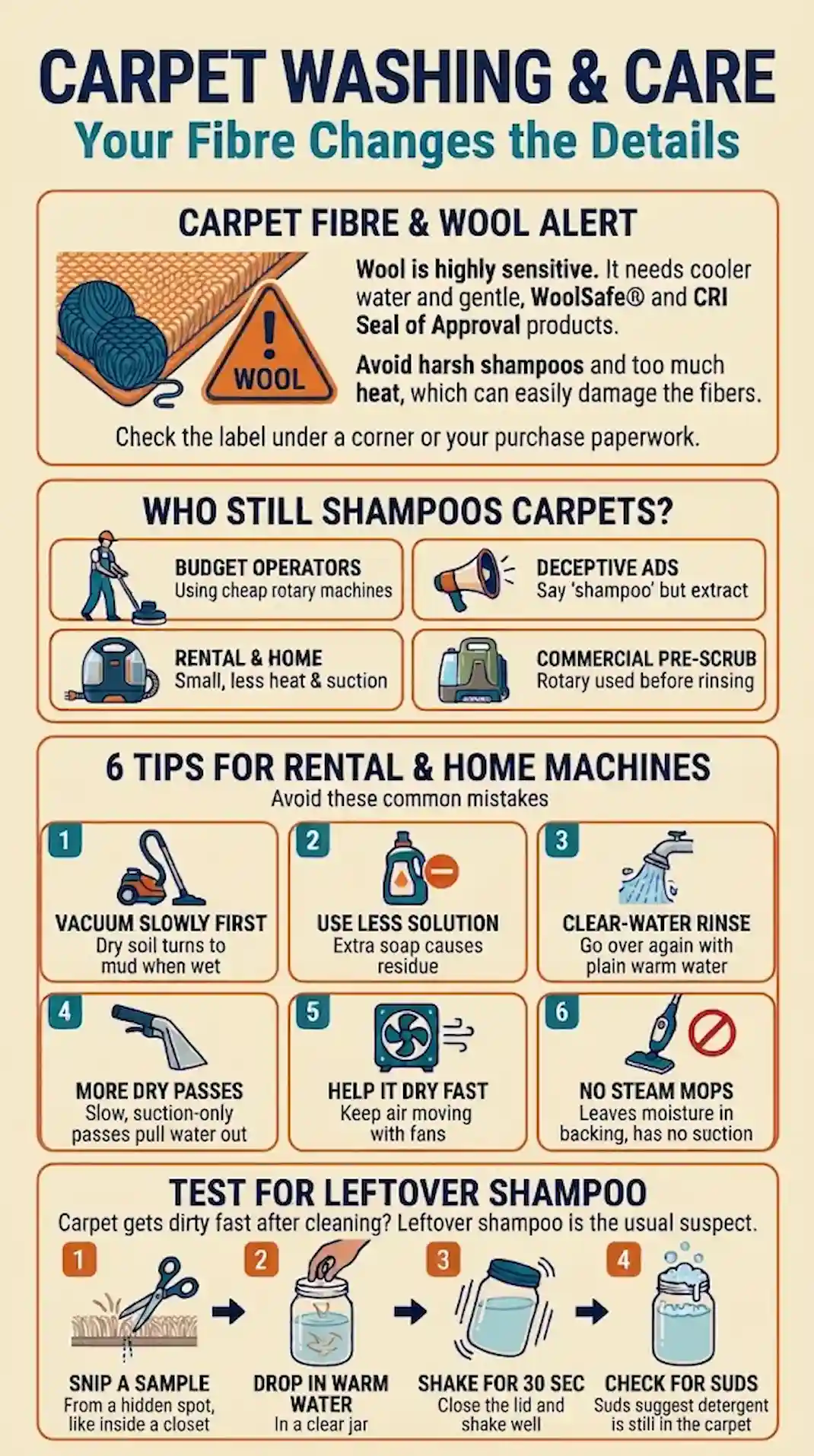
Wool is the one to be careful with. It needs cooler water and gentler products, and a harsh shampoo or too much heat can damage it. We use cleaning products with WoolSafe approval and the CRI Seal of Approval. Loose wool rugs are often better handled through area rug cleaning than on the floor with the wall-to-wall carpet.
So Who Still Shampoos Carpets?
Shampooing hasn’t disappeared, but it now shows up in a few specific places.
- Budget operators who still run rotary machines because they are cheap to buy and run.
- Companies that say shampoo in their ads but actually extract, because that is the word customers search for.
- Rental and home machines, which are sold as shampooers but are small extractors with less heat and suction.
- Some commercial jobs, where a rotary brush is used as a pre-scrub on heavily soiled carpet before it is rinsed with extraction.
Using a Rental or Home Machine? Avoid These Mistakes
If you clean carpet yourself, a few habits make most of the difference between a good result and a sticky one.
- Vacuum slowly first. Dry soil turns into mud once it gets wet.
- Use less solution than the bottle suggests. Extra soap is the main cause of residue.
- Do a clear-water rinse pass. Empty the solution tank, fill it with plain warm water, and go over the carpet again.
- Make more dry passes than wet ones. Slow, suction-only passes pull out more water.
- Help it dry. Run the furnace fan and keep air moving, especially in winter.
- Never use a steam mop on carpet. It has no suction and leaves moisture in the backing.
How to Tell If Old Shampoo Is Still in Your Carpet
If your carpet gets dirty fast after cleaning, leftover shampoo is the usual suspect. This test takes two minutes.
- Snip a few fibre tips from a hidden spot, such as inside a closet.
- Drop them in a clear jar of warm water.
- Close the lid and shake for about 30 seconds.
- Suds on top mean detergent is still in the carpet.
Already Shampooed? Here’s the Fix
More shampoo won’t fix a shampoo problem. Carpet with residue needs a thorough rinse with hot water extraction to flush the old detergent out. After that, it should stay clean longer between cleanings. This is part of our home carpet cleaning service, so mention past shampooing when you book.
Which Method Is Right for Your Situation?
Your home and your timeline change the details of the best choice. Find your situation below.
| Your situation | Best choice |
|---|---|
| Pets or pet accidents | Extraction with pet urine treatment, priced on site |
| Carpet that resoils fast after past cleans | An extraction rinse to flush out old residue |
| Moving out of a rental | Professional extraction with a receipt |
| Wool carpet or rug | Cooler water and wool-safe products |
| Heavily soiled office carpet | Commercial carpet cleaning with truck-mounted extraction |
| Tight budget, DIY | A rental machine with a clear-water rinse pass |
Homes with pets also need cleaning more often: every 6 to 12 months, compared with 12 to 18 months for most homes.
Does It Matter for a Move-Out?
For a BC rental, the method on paper matters less than the receipt. The province’s tenancy guideline expects tenants to steam clean or shampoo carpets at the end of a tenancy of a year or more. In practice, landlords and property managers usually look for a professional extraction clean with a dated receipt, which is what our move-out carpet cleaning provides.
What to Ask Before You Book
A few questions on the phone tell you which method you are really paying for.
- What method do you use? If the answer is a rotary shampoo with no rinse, expect residue.
- Is the carpet rinsed? Extraction should pull the solution back out.
- How long will it take to dry? A few hours is normal. A day or more means too much water.
- Do you pre-treat traffic areas? That is where most of the soil sits.
- Are your products safe for my carpet fibre? Wool needs cooler water and wool-safe solutions.
How We Clean Carpet
Every carpet we clean gets hot water extraction, with pre-treatment on traffic lanes and spots, then a slow rinse that pulls the solution back out. Most homes take 1 to 2 hours, and most carpets are dry in 4 to 8 hours. If you’re weighing a shampoo against a proper rinse, count your rooms and stairs, mention any pets, and request a free estimate. We’ll give you a number on the phone and confirm it at your door.