
A bottle labelled “natural” can still be the wrong choice for your carpet. You may need a product for a wool rug, a solution for a home extractor or a treatment for one small spill. Those are different jobs, and a reassuring phrase on the packaging does not tell you whether the formula fits yours. If you are searching for a non-toxic carpet cleaner, start with the carpet care instructions and the task you need to complete. This guide explains what to check on the bottle, how to compare products and which questions to ask before booking professional cleaning.
Start with the job rather than the marketing claim
Write down what you are trying to remove and where it is. A fresh drink spill on a synthetic bedroom carpet calls for a different decision from a recurring smell in a wool area rug. Keep the carpet’s fibre information nearby and check whether the care guide specifies approved products or methods. Then read how the cleaner is meant to be used. Look for directions that match your task, rather than assuming a product described as a carpet cleaner can go anywhere on any textile.
| Product type | What to check before use |
|---|---|
| Spot remover | Permitted fibres, stain types, application and removal instructions |
| Machine solution | Compatibility with the carpet and your extractor, plus the correct dilution |
| Deodorizer | Whether it cleans the source of the problem or only addresses odour |
| Pretreatment | How long to leave it and which cleaning stage must follow |
A product can have more than one use. Each use still needs its own directions. If you cannot find instructions for a machine tank, do not infer them from the spot-cleaning directions. 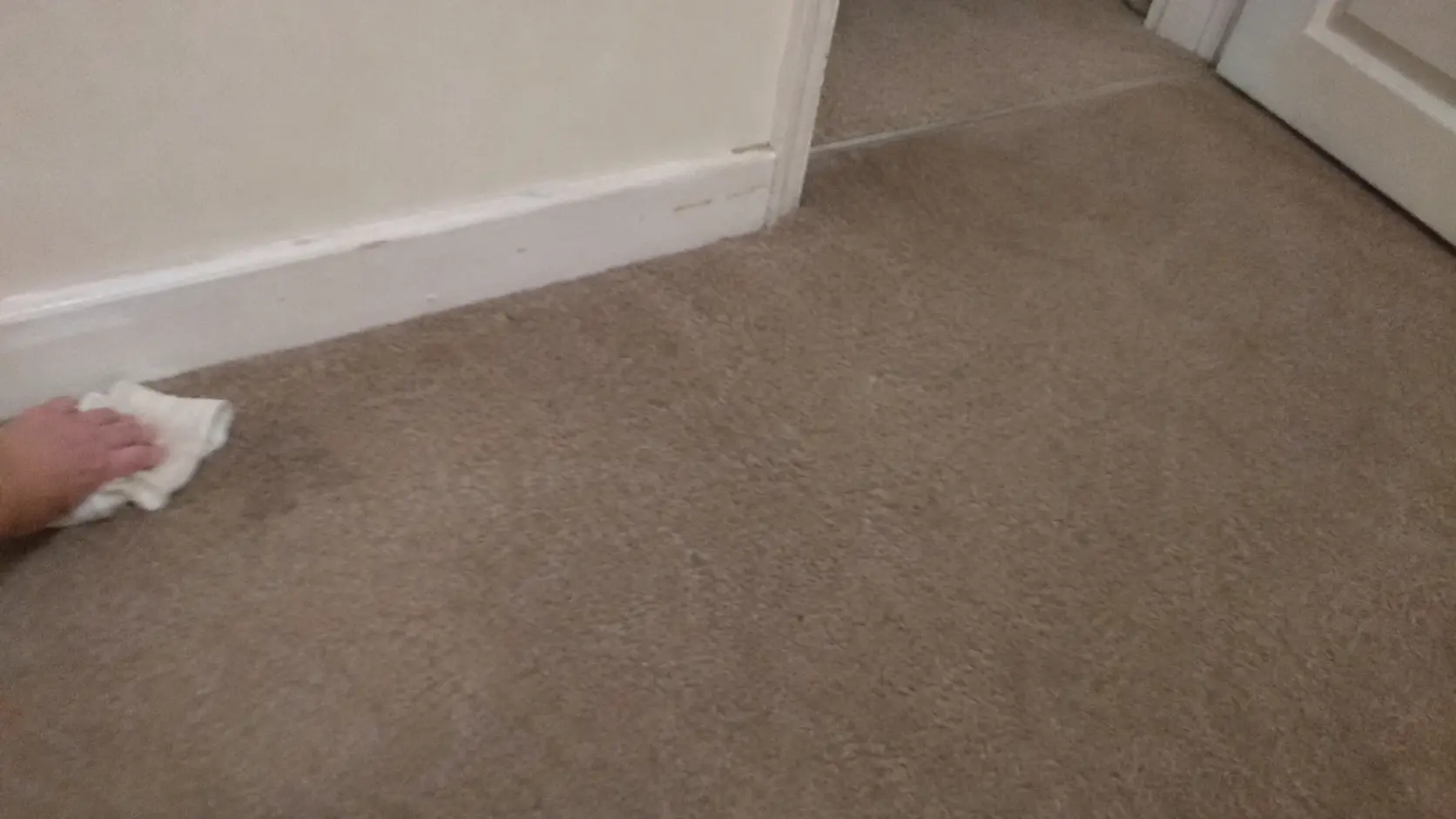
What the words on the front label do not explain
“Non-toxic,” “plant-based” and “eco-friendly” may describe different aspects of a product. Treat them as claims to investigate, rather than a complete set of instructions. Ask what the manufacturer means and which information supports that particular claim. Likewise, a fragrance-free description tells you something about fragrance; it does not establish compatibility with every carpet fibre. A biodegradable claim concerns a different question from whether a concentrated product needs gloves or dilution during use. For a useful comparison, separate your priorities. You may want an unscented product, a formula approved for wool or a solution accepted by your machine manufacturer. Identify those requirements first so a broad marketing phrase does not make the decision for you.
Read the directions before comparing ingredients
Find the permitted surfaces, warnings, dilution and aftercare steps. Health Canada’s household chemical guidance advises reading the label, following its handling instructions and contacting the manufacturer when you need more ingredient information. An online ingredient list can help you ask better questions, but it does not replace directions for the finished formula. Confirm that the information belongs to the exact product you have, including its version and intended market. Similar bottle designs do not guarantee identical instructions. For example, imagine one bottle gives only spot-treatment directions and another specifies a dose for extraction equipment. Even if both use similar words on the front, only the second gives you information for deciding whether it belongs in your machine. You still need to check the machine manual and carpet care guide. Keep products in their original labelled containers, follow the specified protective measures and store them as directed. Do not mix household cleaners to make a supposedly gentler formula. If directions are missing or contradictory, contact the supplier before use.
Check what a certification actually covers
A logo is useful when you can verify both the product and the programme behind it. Look up the exact product name in the issuing organisation’s directory and read what the testing covers. Avoid treating every green-looking symbol as an independent certification. The Carpet and Rug Institute’s Seal of Approval programme tests cleaning performance and effects on carpet appearance and performance. That answers an important carpet-care question. It does not, by itself, answer every question you may have about a person’s sensitivity to a formula or how that formula should be handled. If a bottle says it is suitable for wool, check the actual approval or manufacturer’s directions for your rug. Do not transfer a certification from one product in a range to all the others.
Give wool and mixed fibre rugs their own check
Find the rug label or purchase information before choosing a treatment. A carpet machine being available at home does not establish that it is appropriate for the rug beside it. Fibre blends can also complicate the choice: WoolSafe advises caring for a blend according to its most sensitive component. Our approach to cleaning wool and other area rugs explains why the material affects the method. If the fibre or permitted treatment is unknown, ask for advice before wetting a visible area. Where the care guide permits testing, follow its method on a hidden patch and allow the area to dry before comparing colour and texture. Stop if you see a change. A successful test with one product and dilution does not approve a stronger mix or a different treatment.
Compare bottled products without turning the label into a guarantee
A practical shortlist needs more than a “best natural cleaner” ranking. Use the same questions for every candidate so you can see where information is missing.
- Does the product list my carpet or rug material among its permitted uses?
- Is it a spot treatment, machine formula or another type of product?
- Are the dilution and application directions clear?
- What removal, rinsing or drying steps does it require?
- Can I verify any relevant approval for this exact formula?
- Is there a manufacturer contact for unanswered questions?
Take photographs of the label and your carpet information if you need to contact a supplier. Ask one specific question, such as whether the formula is suitable for the named fibre in the named extractor, rather than asking whether it is simply “safe.” 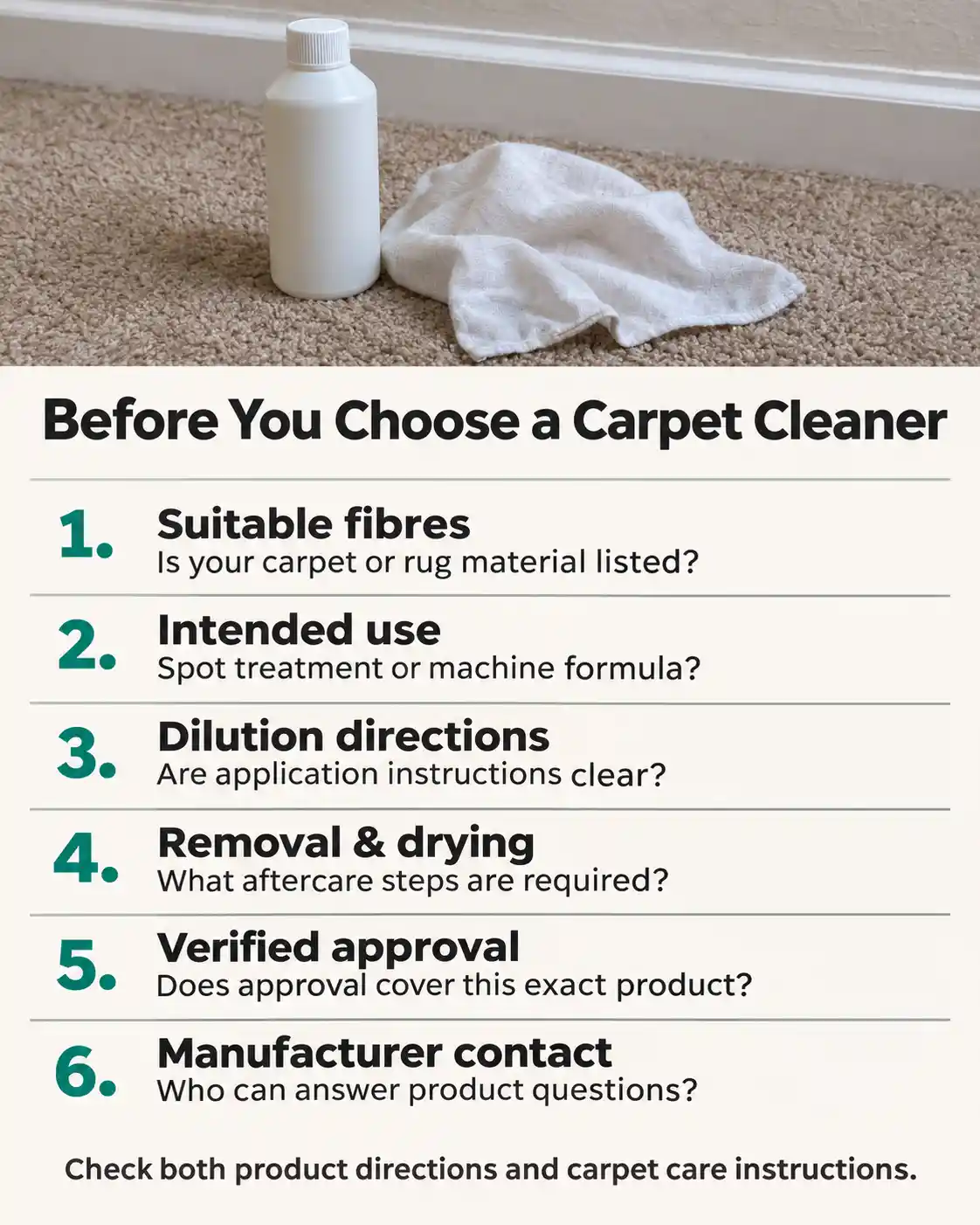
Be cautious with homemade carpet cleaner recipes
An online recipe may not account for your carpet’s dyes, backing or machine requirements. Vinegar, dishwashing liquid and essential oils appearing in a popular recipe do not establish that the mixture is appropriate for your installation. Follow approved care instructions rather than combining products or adjusting a recipe until it smells pleasant. Do not add fragrance to conceal a smell that returns after drying. Our guide to why a carpet can smell after cleaning helps you consider the cleaning history before choosing another treatment. If you have already tried a mixture, record its ingredients and approximate amounts. Share that information with the cleaner before more product is applied.
What to ask a professional cleaner
Before booking, explain what the carpet is made of, what caused the mark and which treatments have already been used. Mention any request to avoid added fragrance so the team can discuss the proposed process with you. Ask how the product will be selected, how loosened soil and solution will be removed, and what drying arrangements are needed. If a particular ingredient matters to you, request the exact product information before agreeing to the work. Our residential cleaning process for houses and condos describes AAA Miracle’s home carpet service. Product choice belongs within that whole process; choosing a bottle alone does not resolve every stain or odour problem. For help planning a visit, speak with the AAA Miracle team in Vancouver. Have your carpet details and treatment history ready, and explain the result you need before deciding on another home treatment. 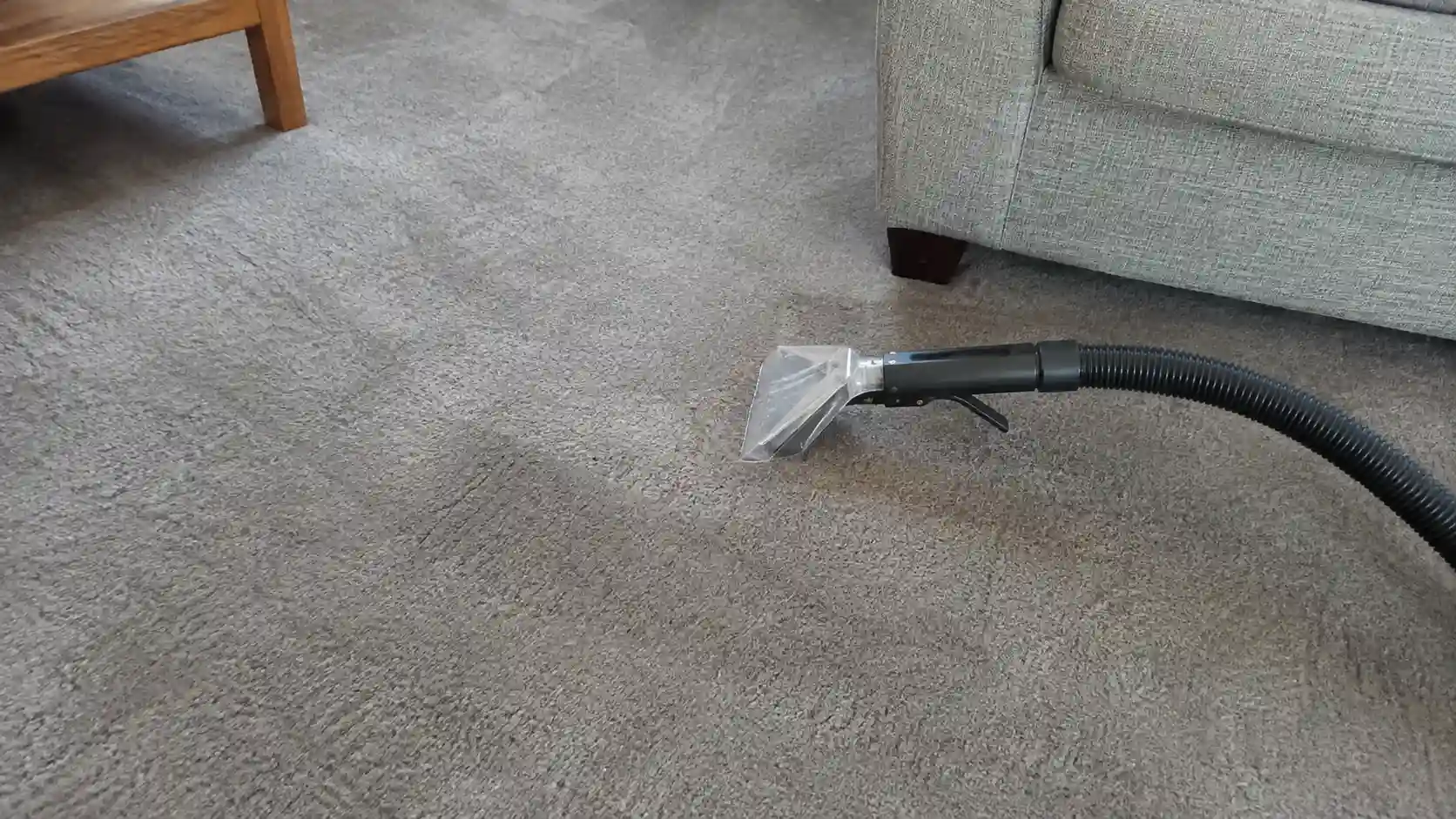
Questions about non toxic carpet cleaners
Is a fragrance free carpet cleaner suitable for every carpet?
No. You still need to check the permitted fibres, intended use and directions. A fragrance-related claim does not replace the carpet care guide or machine instructions.
Can a non toxic spot cleaner go in my carpet machine?
Only use it that way when the product, machine and carpet instructions permit it. Spot-treatment directions alone do not provide a machine dilution.
Does a natural cleaner remove every stain?
No product description guarantees that every mark will come out. Tell the cleaner what caused the stain, when it happened and what you have applied. Colour loss or material damage may require a different assessment.
How do I know which products AAA Miracle will use?
Ask the team about the planned treatment for your particular carpet or rug before booking. Share any product concerns and request the relevant information rather than assuming every job uses the same formula.